The Spring 2026 edition of our Hospice Horizons newsletter is now live. Browse the latest news and information about Hospice of Central PA.
Archives: News Posts
Holds our news posts and news postspecific data
A Life Measured in Laughter and Connection
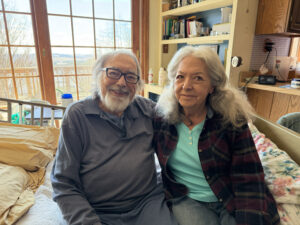 William “Bill” Brundick has a way of setting the tone the moment you meet him, through humor, warmth and an unmistakable desire to leave people just a little lighter than he found them.
“I don’t like anybody leaving me without smiling,” he says with a grin. “That’s just something in me.”
Bill is currently under hospice care and has been on service since 2025 for congestive heart failure. Starting care early has given him and his family the gift of time to focus on connection, joy and the moments that matter most.
When asked to describe where life has brought him today, he doesn’t overthink it.
“Content and restful,” he says simply before adding with a familiar spark of humor, “I sleep a lot.”
Living fully now is not about doing more, but about being present. “Happy and productive,” he says— not in the traditional sense, but in a quieter, more intentional way: showing up for others, embracing connection and finding meaning in the small moments that make life feel full. Early hospice support has allowed him to savor these moments fully, creating space for laughter, reflection and family connection.
Laughter flowed naturally during the interview with Bill, whether in playful exchanges with his wife, Eleanor, of more than 40 years, or when his daughter Lorien stopped by with her rescue pug, Rush—affectionately known as “Smush.” Light teasing, shared jokes and small moments of humor gave the conversation a joyful rhythm.
“Amanda and Steffanie, both of whom were providing care during the interview with Bill, also make you laugh,” Eleanor noted with a smile.
Amanda Grim, a Choices Healthcare Hospice Aide, brings a steady, compassionate presence to each visit, paired with a playful, humorous spirit that matches Bill’s own. Alongside her, Steffanie Hawthorne, an RN Case Manager, guides care with clinical expertise and genuine warmth. Together, they turn routine visits into moments Bill looks forward to, creating comfort, connection and space for joy.
“I look forward, so forward, to their visits,” he says with a smile.
For Eleanor, that support has made a difference, both visible and quiet. It has created space for Bill to be comfortable, for them to focus on what matters most and for the small, shared experiences that make life feel full.
“We have a good time,” Bill says. “Togetherness… focus on togetherness.”
What matters most now is not grand gestures, but simple, tangible moments. “Closeness. Looking for fun. And touch.” These quiet, human connections are where life feels fullest.
Looking back, Bill’s life has been anything but small. He spent 18 years as a management consultant after beginning his career at Westinghouse, a nuclear power company, building a path that allowed independence and opportunity. Travel, especially, became a shared passion with Eleanor and a thread connecting many of their memories.
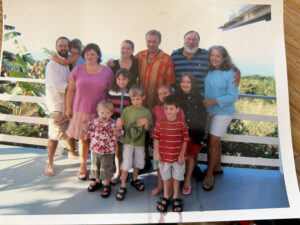 “Hawaii,” he says without hesitation. “It makes your knees weak. It’s that beautiful.”
On Kauai, Bill found an overlook so breathtaking it made his knees wobble. It was not just the scenery, but what it represented: time together, shared wonder and the freedom to simply be present. Hawaii was not just a destination; it was a feeling carried long after their return home.
“I wish everybody could travel, local or international… just to connect with other people… human beings,” he says.
There is a sense of acceptance, even humor, in how he reflects on life. “Everybody’s heading for the same place,” he says with a shrug. “So what?” For Bill, that phrase is freeing—it strips away what does not matter and brings everything else into focus: relationships, shared experiences and the ability to find lightness even in serious moments.
Humor is never far away. He teases, jokes and turns ordinary moments into something memorable. “When everybody laughs at once, it makes everything better,” he says.
What stands out most is how Bill chooses to show up—in connection, in gratitude and in humor. Early hospice care has allowed him to create more moments like these: extra time to savor laughter, share stories and connect deeply with family and friends. There is no sense of finality in his words, only presence. Family moves in and out of the room. Conversations shift. Laughter continues.
At the center of it all is Bill, exactly as he intends to be: engaged, connected and making sure, above all else, that no one leaves without a smile.
A Life in Stories
Beyond his career and travels, Bill is also a published author, a creative pursuit that reflects the same curiosity, humor and perspective he brings to everyday life.
 His book, A Double Baker’s Dozen—+4, is a collection of short stories drawn from a mix of personal experiences, observations and imaginative ideas. The title itself reflects Bill’s playful, analytical nature. As he explains it, a “baker’s dozen” is 13, double that makes 26, and when you add four more, you arrive at 30, the number of stories included in the collection.
The stories come from many places. Some are rooted directly in Bill’s own life, capturing moments and perspectives shaped by years of experience. Others were inspired by classic films and television from earlier decades, blending nostalgia with creativity in unexpected ways.
Originally published in the 1990s, the book includes a range of pieces, some he loves, some he simply likes and others he admits he would rewrite if given the chance. That honesty, like his storytelling, is part of what makes the work distinctly his.
For Bill, writing was never just about putting words on a page. It was another way of observing the world, making sense of it and, in his own way, connecting with others, one story at a time.
Hospice Care: Myths, Facts & Why It Matters in Senior Living
When someone is facing a life-limiting illness, it can be overwhelming—for the resident and for the people who love and care for them. In senior living communities, families and staff often wonder what options exist when comfort, dignity and quality of life become the priority. One of the most misunderstood services is hospice care.
Many people think hospice is only for the very last days of life. But that’s a myth. Hospice is about providing specialized support, comfort and dignity for residents in the time they have left.
What Is Hospice Care?
Hospice care is specialized medical care for people living with advanced illnesses who have a limited prognosis, typically six months or less if the disease follows its usual course. Its goal is simple: to ensure comfort, dignity and quality of life.
Hospice addresses physical symptoms such as pain, shortness of breath or agitation while also supporting emotional, social and spiritual needs.
Most importantly, hospice care works in conjunction with senior living staff. Residents do not have to leave their familiar surroundings. Hospice brings an extra layer of expertise, support and guidance directly into the community — enhancing care and quality of life right where residents live.
Common Myths About Hospice Care
Myth: Hospice is only for the last few days of life.
Fact: Hospice care is available for residents who meet eligibility criteria, and many receive services for several months. Starting hospice earlier allows for better symptom management, proactive support and a more comfortable experience.
Myth: Hospice replaces the care provided by the facility.
Fact: Hospice complements the care already provided by senior living staff. Nurses, aides, social workers and volunteers work alongside facility staff to manage complex symptoms and provide emotional, spiritual and family support.
Myth: Hospice is only for residents with cancer.
Fact: Hospice supports residents with a wide range of advanced illnesses, including heart disease, lung disease, kidney failure, stroke complications, and Alzheimer’s disease or other dementias.
Myth: Hospice means giving up.
Fact: Hospice is about shifting the focus from curative treatment to comfort and quality of life. It allows residents to live as fully and comfortably as possible while receiving compassionate, skilled support.
Myth: Families must move the resident to a hospice facility.
Fact: Most residents receive hospice care in their current living environment, whether that is assisted living, personal care or long-term care. Hospice care is brought to them — not the other way around.
Myth: Hospice requires a Do Not Resuscitate (DNR) order.
Fact: The purpose and benefit of hospice care is to allow for a peaceful passing in a comfortable and familiar setting like home with loved ones near. While many people wish to have a DNR to avoid unnecessary medical intervention and hospitalization, you are not required to have a DNR to receive hospice care.
Myth: Hospice is too expensive.
Fact: Hospice is covered by Medicare, Medicaid and most private insurance plans. Financial support is be available for residents without coverage.
Myth: You can’t keep your doctor.
Fact: Hospice teams collaborate with the resident’s current physicians, making care more coordinated, personalized and patient-centered.
Why Hospice Matters in Senior Living
Hospice provides an extra layer of support for residents facing advanced illness in assisted living, personal care and long-term care communities. By bringing hospice directly into the facility, residents receive compassionate, specialized care — focused on comfort, quality of life and relief from symptoms — without leaving the home they know.
This care complements what the community already provides, giving families peace of mind and helping residents live as fully and comfortably as possible. Hospice also supports facility staff with symptom management, clinical guidance, and emotional support, creating a stronger care team overall.
Hospice is not about the end of the journey — it’s about making the remaining time meaningful, comfortable and supported.
Learn how hospice care can support your loved one in a senior living community. Contact us today for more information or to schedule a consultation.
Grieving the Loss of a Pet
As a grief counselor, I’ve listened to many people mourning the death of a beloved pet.
For some, the companionship of a pet helped ease loneliness after the loss of a loved one. And for many, making the decision to euthanize a pet carries heavy feelings of guilt. In fact, a survey conducted by Honest Paws found that 68% of respondents said grieving the loss of a pet was more difficult than grieving the death of a family member or friend.
If you’re grieving a pet, consider the following suggestions for support and healing:
- Know and accept that your functioning may not be at its best. You’ve lost an important, integral part of your life.
- Consider holding a small ceremony in memory of your pet. Invite family or friends to share favorite memories.
- Write about your feelings in a journal or a letter addressed to your pet.
- Create a memorial space in your home or yard — a place you can visit to reflect and remember.
- Maintain your routines. If you regularly walked your dog, try continuing those walks while reflecting on the time you shared.
- Acknowledge your emotions as they arise and seek out those who are sympathetic and willing to listen.
Pets are a special source of joy, unconditional love and companionship. As Jon Katz, author of Going Home: Finding Peace When Pets Die, wrote: “A pet’s legacy and purpose is to help us be better human beings. You’ll never forget a pet who gave you so much to remember. Treasure that gift.”
Choices Healthcare Announces the Retirement of President & CEO Steve Knaub, Effective December 31, 2025
 After more than 27 years of service at Choices Healthcare, the parent organization of Hospice & Community Care and Hospice of Central PA, President & CEO Steve Knaub will retire on December 31, 2025. Steve has been a driving force behind the organization’s growth, steering it through significant achievements and fostering strong relationships with healthcare partners and the community.
Knaub’s career with Hospice & Community Care began in 1998 when he joined as Vice President, Chief Financial Officer. His leadership and vision quickly earned him a promotion to Chief Operating Officer in 2002, and in 2011, he became President & CEO. Under his guidance, the organization grew significantly, evolving into Choices Healthcare in 2024—an expansive, mission-driven organization serving thousands of patients and families across Central Pennsylvania.
Throughout his tenure, Knaub led several transformative initiatives. Among his many accomplishments are the expansion of the Essa Flory Center in Lancaster, the opening of the Bob Fryer & Family Inpatient Center and the Pathways Center for Grief & Loss in Mount Joy, and the expansion into York County in 2012. Most recently, he was instrumental in the successful affiliation between Hospice & Community Care and Hospice of Central PA, bringing together two nonprofit organizations with a shared mission to enhance access to quality end-of-life care.
“Serving this organization and our community has been one of the greatest honors of my life,” said Knaub. “When I first joined—then Hospice of Lancaster County—we were caring for 140 patients a day. Today, we serve more than 1,000. That growth reflects not only the increasing need for compassionate end-of-life care, but also our unwavering commitment to meeting people where they are, with the support they deserve.”
“I’ve had the privilege of working alongside an extraordinary team—people who lead with heart, skill and dedication. Together, we’ve expanded access to care during life’s most meaningful moments. I’m incredibly proud of all we’ve accomplished, and I look forward to seeing the organization continue to grow and make a difference for years to come.”
Knaub, a graduate of Shippensburg University with a degree in Business Administration, began his professional journey in public accounting before dedicating his career to nonprofit healthcare.
“Steve has demonstrated exceptional leadership throughout his tenure,” said Geoffrey Eddowes, Chair of the Choices Healthcare Board of Directors. “His unwavering commitment to our patients, families and staff, along with his ability to think strategically while being a good steward of our financial resources, has been foundational to our success. He leaves behind a legacy of excellence, compassion and innovation that will benefit this community well into the future.”
The Board of Directors is conducting a national search for Knaub’s successor, ensuring a smooth transition and continued momentum for Choices Healthcare.
A Legacy of Leadership, Compassion & Philanthropy
 After nearly three decades of dedicated service, Bonnie Jess Lopane, Vice President and Chief Development Officer of Choices Healthcare, will retire on May 23, 2025. While her leadership will be greatly missed, Bonnie’s influence will continue to shape the organization for years. The organization celebrates the extraordinary impact she’s had on its donors and the countless families served.
Since joining the organization in 1996, then known as Hospice of Lancaster County, Bonnie has been a driving force behind the growth of its philanthropic and communications efforts. Through her strategic vision and deep understanding of the donor community, she has helped build a strong foundation of support that makes Choices Healthcare’s mission possible.
“Bonnie has had a tremendous impact on this organization,” shared Steve Knaub, President & CEO, Choices Healthcare. “Her thoughtful leadership and ability to form lasting, meaningful relationships with donors have made it possible for us to expand services, reach more patients and support families during some of life’s most difficult moments. She has truly helped shape who we are.”
Bonnie led the organization through two capital campaigns that raised millions of dollars to expand the Hospice Center on Good Drive in Lancaster and support the building of the Bob Fryer & Family Inpatient Center and Pathways Center for Grief & Loss in Mount Joy. She has also been instrumental in expanding the development program for Hospice of Central PA, which merged with Hospice & Community Care last year.
“During Bonnie’s first year with the organization, it raised $750,000; in 2024, the organization surpassed $8 million in philanthropic revenue,” said Steve Knaub. Throughout her tenure, Bonnie cultivated a highly collaborative and mission-driven team, one that continues to communicate the heart of the organization’s work with clarity and compassion. Under her leadership, the Development and Marketing Communications departments have flourished, ensuring that donor contributions directly support the care and comfort provided to thousands of individuals each year.
“It has been my honor to serve our organization for nearly 30 years,” shared Bonnie. “Our mission is one which impacts every person in our community who can benefit from the specialized care and support that we provide.”
Bonnie has brought more than experience to her role—she has brought authenticity. Her colleagues describe her as a mentor, a thoughtful leader and someone who leads by example. With a background in healthcare administration and a Certified Fundraising Executive (CFRE) designation, Bonnie has long been recognized for her high standards and ethical practice in the philanthropic sector. She’s also been a member of the Association for Healthcare Philanthropy for more than 25 years and has served on a variety of nonprofit boards throughout the community.
As she transitions into retirement, Bonnie looks forward to revisiting some past volunteer pursuits, particular related to literacy, as well as pursuing another of her passions—writing – and is currently working on her first book. While she will be stepping away from her day-to-day responsibilities, her voice and leadership will continue to be felt across the organization.
“Bonnie’s legacy is woven into the fabric of Choices Healthcare,” Steve added. “She has helped us grow in ways that will benefit patients, families and our community for years to come.”
Choices Healthcare is deeply grateful to Bonnie for her years of service, her steady leadership and the positive, lasting change she has made. Her impact will remain a guiding light as we continue to build on the strong foundation she helped create.
Join Choices Healthcare in thanking and recognizing Bonnie Jess Lopane!
Annual Impact
It is with deep gratitude that we present our impact report for the fiscal year 2024. As we reflect on the past year’s achievements, challenges, and the impact of our
collective efforts, we are humbled by the generosity and commitment of our community.
Thank you to our patients and families for their continued trust and support, our donors for their generosity, our employees and volunteers for their hard work and dedication, and our referral sources for their collaboration. Together, we have the power to ensure every person living in our community will receive the care and compassion they need while coping with serious illness, facing end of life, or experiencing the loss of a loved one.

Grief During the Holidays: Some Tips

The winter holidays are generally perceived as “the most wonderful time of the year.” But for those who are facing grief after the death of a loved one, the holidays may instead be a time filled with pain and sadness.
Even those for whom grief is not as fresh, the holidays may serve as an annual reminder of the loss — not only of that person, but of tradition and celebration.
Bereavement professionals working in hospice and palliative care understand how difficult this season can be. They support families coping with loss all year long. Bereavement counselors emphasize the importance of making decisions that feel right to the grieving person and giving oneself permission to make new or different choices during the holidays.
Experts in grief offer some tips:
Be Willing to Change Traditions.
Holidays often center on certain traditions and rituals. For some, continuing these traditions without a loved one may be an important way to continue sharing their memory. For others, it may be more comforting to develop new rituals to help lessen the pain of the loss.
Help Reduce Stress.
While the holidays can be filled with meaning, they can also be filled with pressure and stress because of additional tasks such as shopping, baking and decorating. Grieving people should be encouraged to prioritize what needs to be done and focus on those projects that may bring them pleasure. Perhaps the gift list can be pared down, cards need not be sent out, or another family member can cook the family dinner this year to help alleviate their burden.
Remember Those Who Have Died.
The holidays can bring opportunities to remember the person who has died in a way that is personally meaningful. Some families choose to participate in holiday events at a local hospice. Others may choose to share special family stories over a meal. Some may find that making a donation to a special charity or volunteering time to help others in need may be a comforting way to honor their loved one.
During December, Hospice of Central PA organizes multiple “Tree of Light” events throughout central Pennsylvania. These gatherings offer a meaningful chance to reflect and honor loved ones amidst the busy holiday season. For more information about these events, visit hospiceofcentralpa.org/events/
- Harrisburg: Tuesday, Dec. 3 at 7 p.m.
- Carlisle: Wednesday, Dec. 4 at 7 p.m.
- Pottsville: Wednesday, Dec.11 at 7 p.m.
Hospice and palliative care professionals know of the importance of providing emotional and spiritual support to those who are grieving, but most importantly, they remind us that a person grieving should do what’s most comfortable for them during this time of year.
To learn more about grief and loss or about hospice and palliative care, contact Hospice of Central PA at 717-732-1000 or visit hospiceofcentralpa.org.
Learn What Hospice Care Really Means to Patients and their Families
What makes a good death? This is a question that many people prefer not to think about in their day-to-day lives. However, for patients facing an uncertain future, it is an extremely relevant reality. The answer can vary from person to person, depending on individual personalities, interests and desires. For most people, a good death is quite simple. It means being physically comfortable, at peace in your own home, surrounded by your loved ones doing the things you love to do up until the very end. These essential details are made possible by hospice care.
Hospice, by definition, is a team-oriented approach to providing specialized care for people facing a life-limiting illness or injury. It includes expert medical care, pain management and emotional support for patients and their families. But more simply, hospice care supports living one’s life to the fullest with dignity regardless of how much time remains.
Seven in 10 Americans said they would prefer to die at home according to a Time/CNN Poll. Statistics show that only 25% actually do according to the Centers for Disease Control and Prevention. In a recent national survey, the overwhelming majority of respondents agreed that expertise in keeping a terminally ill patient as comfortable and as pain-free as possible is the single most important service to consider when caring for a loved one and the end-of-life experience. This is the essence of hospice care.
One of the great myths of hospice, for many who have not experienced it, is that hospice patients are merely lying in a bed, barely conscious. This is not the case. When a patient is admitted at an appropriate time, hospice care can improve their quality of life. Research shows that health care providers feel responsible to discuss hospice with their patients when the time is right, as it provides a type of care that they are unable to give. Nearly three-fourths of family caregivers agree that hospice care is a better choice for a terminally ill patient. Of this group, 69% believe that involvement in hospice makes a better impact on the patient’s family as well.
Another hospice myth is that families lose control over what happens to their loved ones. The facts are that a family is generally able to choose their preferred hospice provider for a loved one, and can be trained to serve as a primary caregiver, with a specialist to provide support when needed. It is the unique nature of hospice that allows for the feeling of family and comfort to become embedded and vital in the patient’s care. This concept of more family interaction explains the overall goal of hospice – creating more moments of life before a life is over.
Hospice enables moments and memories that would otherwise not occur. It is the quality of these final moments, after all, that can define a “good death.”
It’s never too soon to explore your end-of-life options. For more information about hospice care, visit hospiceofcentralpa.org.
Hospice of Central PA Announces the Retirement of President Gil Brown, Effective December 31, 2024

After more than a decade of service at Hospice of Central PA, President Gil Brown will retire on December 31, 2024. Gil has been a driving force behind the organization’s growth, steering it through significant achievements and fostering strong relationships with healthcare partners and the community.
Gil, a native of Union Dale, Pennsylvania, has more than 30 years of experience in healthcare operations and management. Before joining Hospice of Central PA, Gil served for eight years as Chief Operating Officer of Hospice by the Sea, Inc., a Florida-based not-for-profit provider of hospice, home healthcare, and palliative care services. His extensive career also includes leadership positions with Aetna Health Plans, the Queens Health Network of the New York City Health and Hospital Corporation, and Continuum Health Partners in New York City.
Gil holds a Master of Science in Organizational Behavior from the University of Hartford’s Barney School of Business and a Bachelor of Arts in Psychology from Bloomsburg University. He also holds certifications as a Certified Hospice and Palliative Care Administrator (CHPCA) and Senior Professional in Human Resources (SPHR).
Since joining Hospice of Central PA, Gil has led the organization through numerous milestones, including earning Joint Commission accreditation and securing a 5-star status in the We Honor Veterans program offered by the National Hospice and Palliative Care Organization. Under his leadership, Hospice of Central PA expanded its palliative care services and became a trusted hospice provider, building key relationships with local hospitals and healthcare systems.
“Working with Gil has been a truly inspiring experience,” commented Hank Straub, HCP Board Member. “His unwavering commitment to compassionate care and his visionary leadership have not only shaped Hospice of Central PA but also set a high standard for excellence. Gil’s ability to lead with both heart and strategic focus has made a lasting impact, and it has been an honor to collaborate with him in serving our community.”
Reflecting on his time at Hospice of Central PA, Gil shared, “The best part of my job has been reading messages from grateful patient families, meeting with our dedicated staff, celebrating our positive quality scores, and serving as an ambassador for the organization in the community.”
Gil continues to be instrumental in the affiliation between Hospice of Central PA and Hospice & Community Care which became effective on January 1, 2024. “I am confident that the recent affiliation will strengthen our ability to adapt to changes in the healthcare environment, ensuring that both organizations remain community-based, non-profit providers of hospice and palliative care,” expressed Gil.
“Partnering with Hospice of Central PA and working alongside Gil has been an excellent opportunity for our organization,” shared Steve Knaub, CEO, Hospice & Community Care. “His leadership and commitment to providing exceptional care have consistently set a high standard. The collaboration between our teams has already proven to be a rewarding experience, and I am excited for the future we are forming together, building on the strong foundation that Gil and his team have established.”
Looking ahead to his retirement, Gil said, “I plan to declutter my home, play more tennis, and figure out what comes next as I search for a new purpose in this next chapter of my life.”
Gil resides in Susquehanna Township with his husband Pedro Lozada and their two dogs, Dan and Dora. He will be greatly missed by the Hospice of Central PA community, and his contributions will leave a lasting legacy.